
Making Your Home More Energy Efficient: Where Should You Start?
From insulation and heat pumps to solar panels and battery storage, discover how to improve your home's energy efficiency, what it might cost and where to begin.
With rising energy costs and an increasing focus on sustainability, more homeowners are looking for ways to make their properties more energy efficient.
But where should you start? Is it worth installing solar panels? Should you consider a heat pump? Or would improving your insulation make a bigger difference?
The answer depends on your property, your budget and your long-term plans.
At LOTA Architecture, we believe the best results come from considering energy efficiency as part of the overall architectural design, particularly when planning an extension, renovation or replacement dwelling.
1. Start with the Building Fabric
Before investing in renewable technologies, it's important to understand how your home currently performs.
Heat escapes through roofs, walls, floors, windows and uncontrolled air leakage. Improving these elements can reduce heating demand, lower running costs and create a more comfortable home.
Common improvements include:
Roof and wall insulation: Reducing heat loss through the building's external envelope.
Floor insulation: Particularly beneficial when replacing floors or installing underfloor heating.
High-performance glazing: Improving thermal comfort and reducing draughts.
Airtightness: Reducing unwanted air leakage while maintaining appropriate ventilation.
For homeowners undertaking an extension or renovation, it's worth considering these improvements together. For example, upgrading insulation while construction work is already taking place can be more economical than returning to undertake the work later.
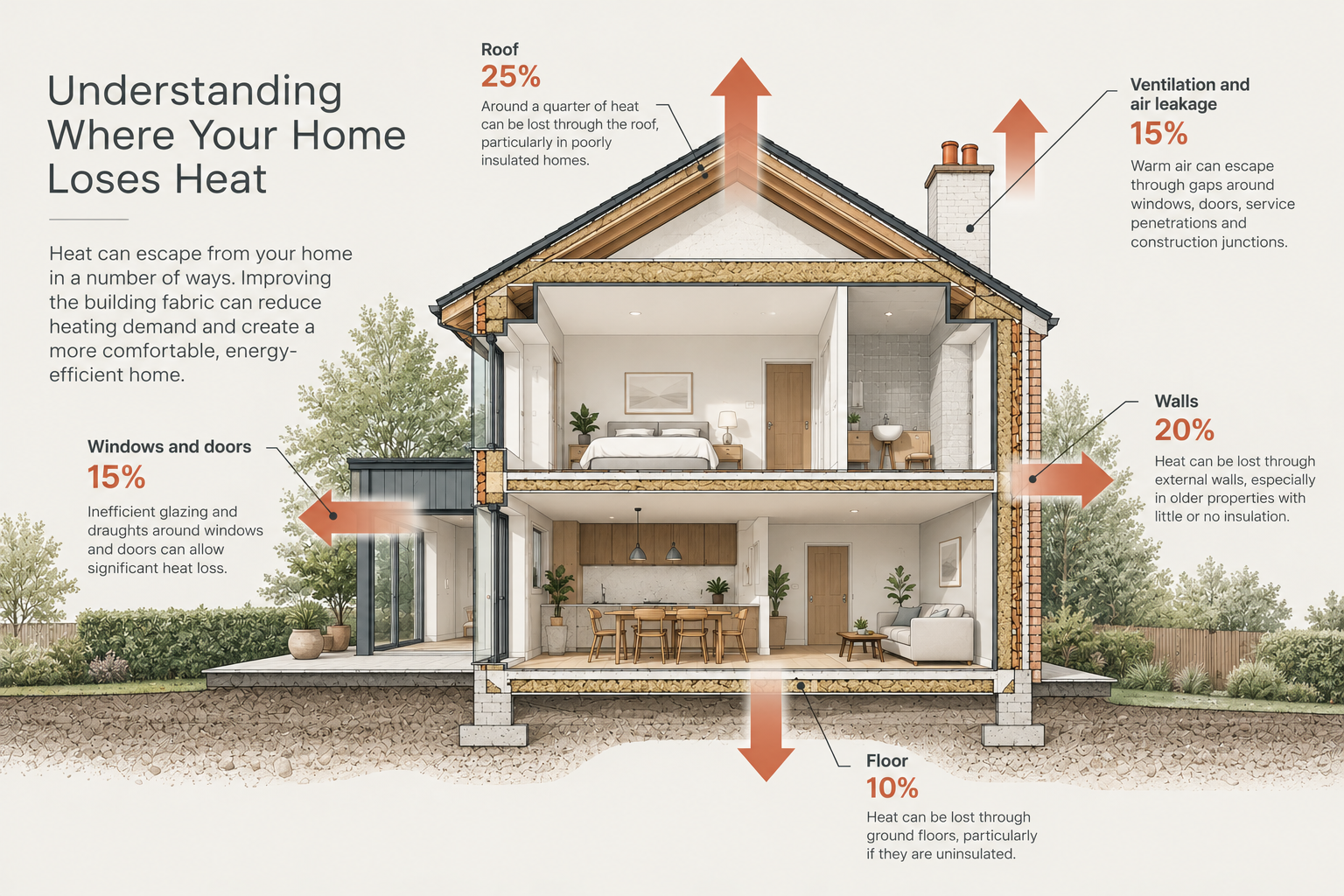
Figure 1: Common routes of heat loss through a residential property. Actual proportions vary depending on the building's construction and insulation.
2. Explore Heating and Renewable Technologies
Once you've considered the building fabric, the next step is to explore which technologies might suit your home.
Air Source and Ground Source Heat Pumps
Heat pumps provide an efficient alternative to conventional heating systems.
Air source heat pumps (ASHPs) extract heat from the outside air, while ground source heat pumps (GSHPs) use underground collectors or boreholes to extract heat from the ground.
Both can provide heating and hot water, although ground source systems generally involve greater installation costs and groundwork.
Heat pumps work particularly well with appropriately designed underfloor heating or radiators.
Importantly, room-by-room heat-loss calculations should inform the heating system design, ideally based on the property's proposed insulation improvements.
Solar Panels and Battery Storage
Solar photovoltaic (PV) panels generate electricity from daylight, helping reduce reliance on grid electricity.
Battery storage allows some of that electricity to be stored for later use, potentially increasing the proportion of solar-generated electricity used within the home.
For homeowners planning extensions or replacement dwellings, considering solar panels early can influence roof orientation, design and available installation space.
Ventilation and Heat Recovery
As homes become better insulated and more airtight, appropriate ventilation becomes increasingly important.
Mechanical ventilation with heat recovery (MVHR) can provide controlled ventilation while recovering heat from outgoing air.
However, it's generally best suited to properties designed with a coordinated airtightness and ventilation strategy.
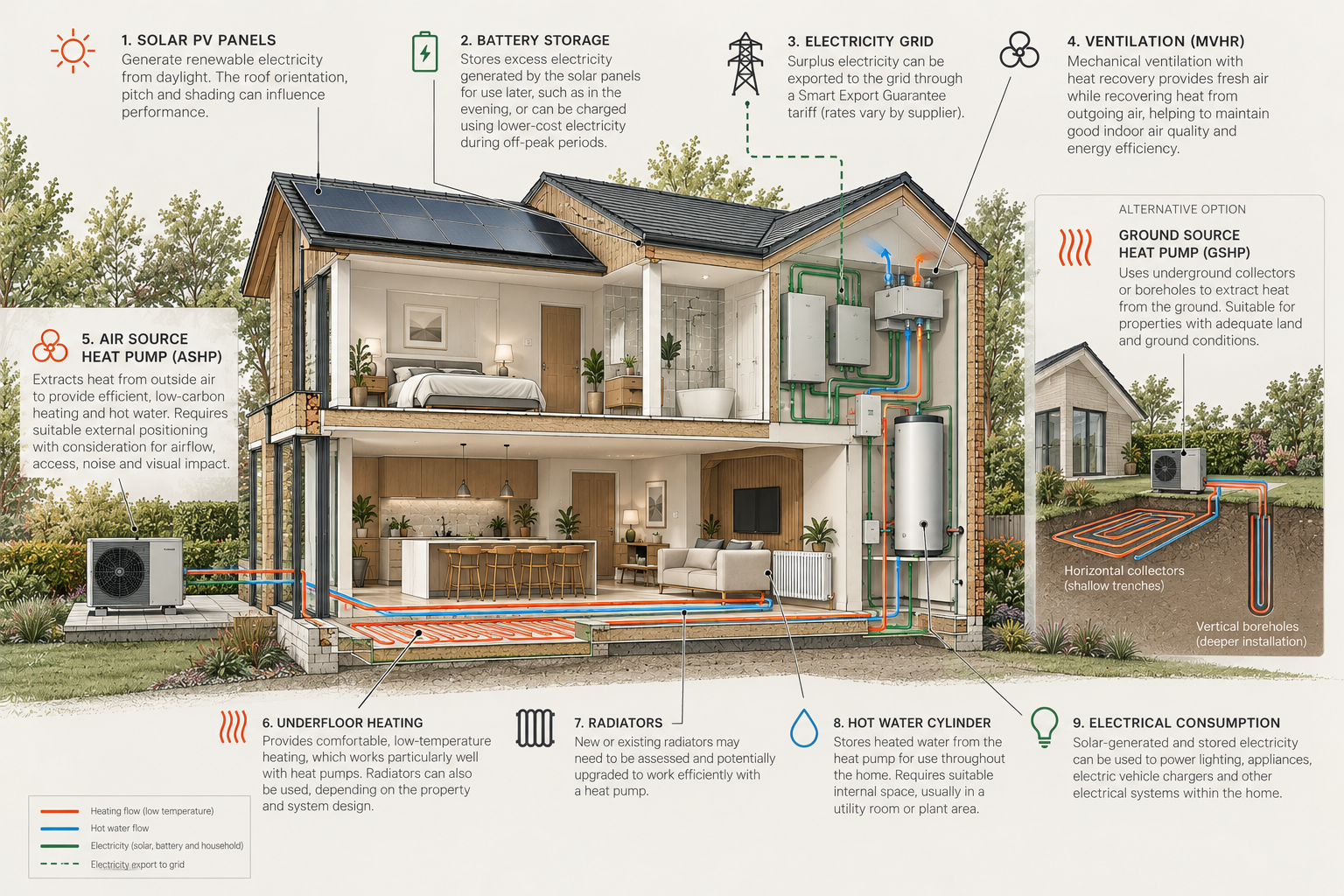
Figure 2: How solar PV, battery storage, heat pumps, heating distribution and ventilation can be integrated into a residential property. Air source and ground source heat pumps are illustrated as alternative options.
3. How Much Do Energy-Efficient Improvements Cost?
Installation costs vary considerably depending on the property and the technologies involved.
Some improvements, such as loft insulation, can be relatively inexpensive, while heat pumps, solar PV and extensive insulation upgrades require a larger investment.
The timing of the work is also important.
For example, installing floor insulation while replacing an existing floor may be more cost-effective than undertaking the work separately.
The following table compares common improvements, indicative installation costs and potential government incentives.
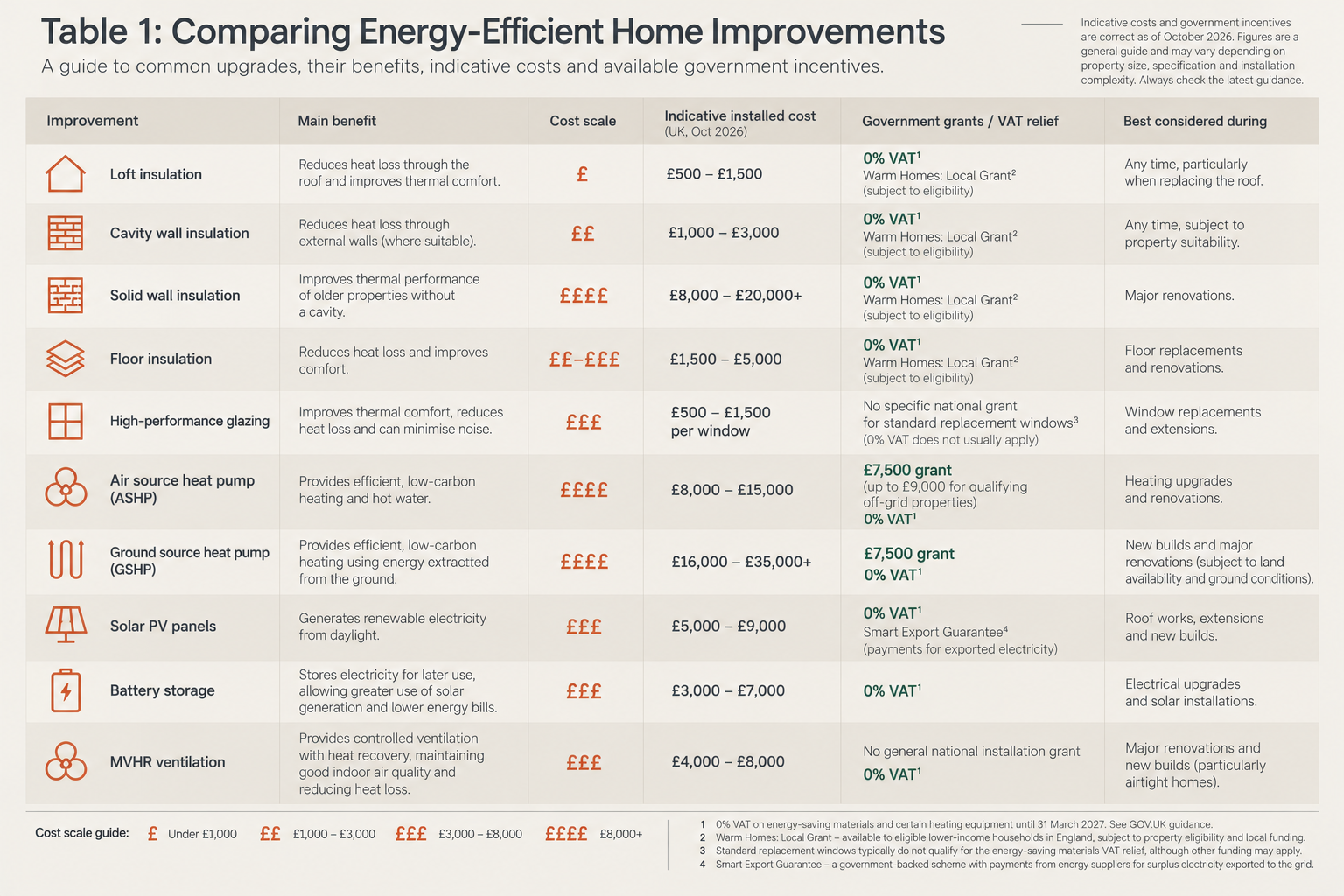
Table 1: Indicative UK installation costs and potential incentives, October 2026. Actual costs and eligibility vary depending on the property, specification and applicable scheme requirements.
Are Government Grants Available?
Several schemes may help reduce the cost of eligible improvements:
Boiler Upgrade Scheme: Provides grants towards qualifying heat pump installations, including £7,500 for eligible air-to-water and ground source heat pumps. Higher support may be available in certain circumstances.
Warm Homes: Local Grant: Supports eligible lower-income households in England with improvements such as insulation and low-carbon heating.
VAT Relief: Certain qualifying energy-saving materials and installations currently benefit from 0% VAT until 31 March 2027.
Smart Export Guarantee: Allows eligible homeowners with solar PV to receive payments for surplus electricity exported to the grid.
Eligibility and funding can change, so it's important to check the latest government guidance before committing to an installation.
4. What's the Best Process for Improving Your Home?
One of the most common mistakes is considering individual technologies without understanding how they will work together.
For example, installing a heat pump before upgrading insulation could result in an unnecessarily large heating system.
We recommend a coordinated approach involving four key stages.
Understand
Review your property's existing construction, insulation, glazing, heating and energy consumption.
An architectural survey and existing EPC may provide a useful starting point. Additional assessments, such as thermal imaging or airtightness testing, should generally only be commissioned where there's a clear benefit.
Specify
Identify suitable improvements and develop a coordinated architectural specification.
This includes insulation, glazing, airtightness, ventilation and the requirements of any proposed renewable technologies.
Specialist calculations, particularly room-by-room heat-loss assessments for heat pumps, help ensure systems are appropriately designed.
Implement
Finalise costs, check grant eligibility, obtain necessary approvals and appoint suitable contractors.
Coordinating the different improvements can help avoid unnecessary alterations and duplicated work.
Verify
Ensure heating and ventilation systems are properly commissioned, obtain relevant certificates and monitor energy consumption.
Additional testing may be beneficial for projects with specific performance targets.
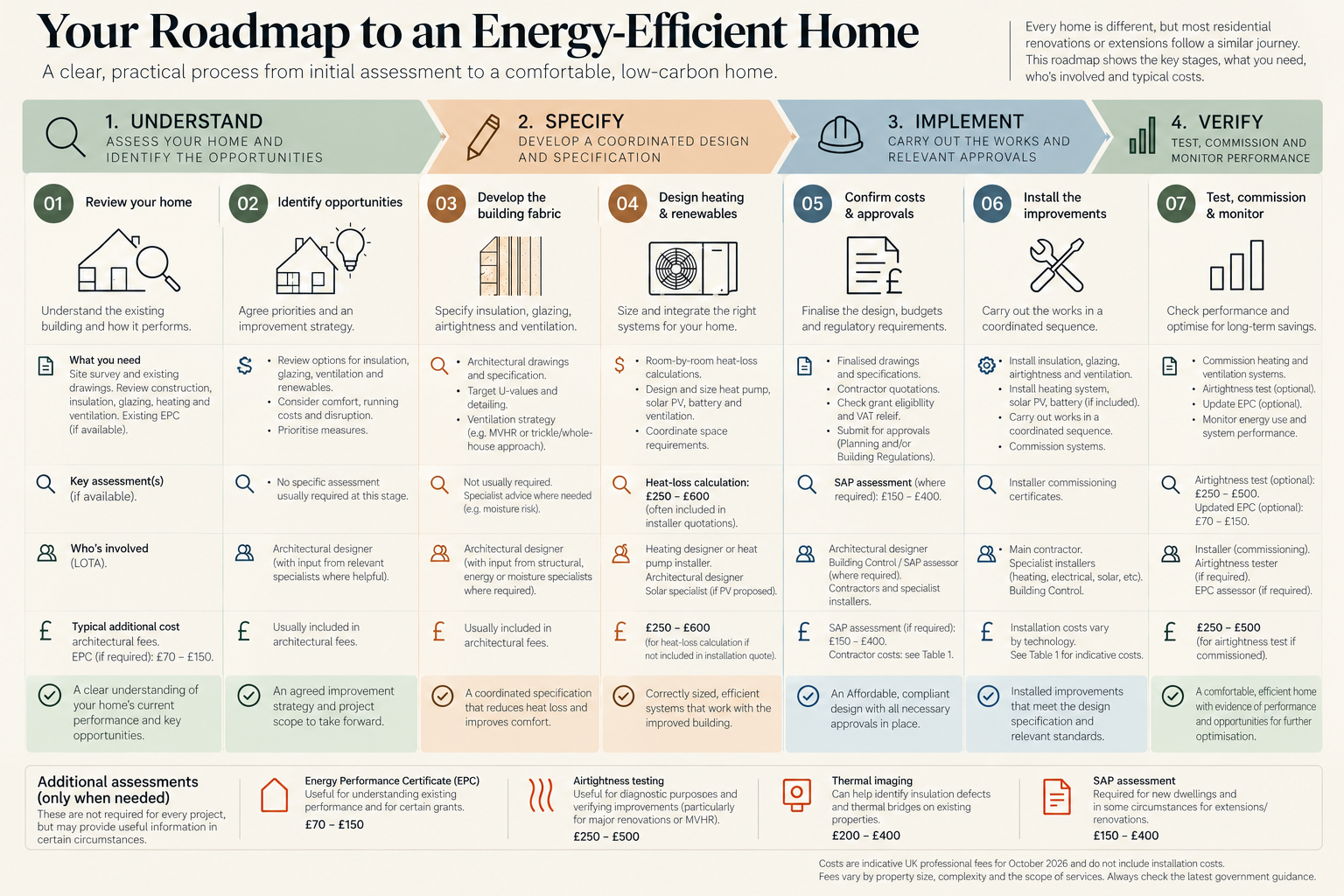
Figure 3: A practical roadmap showing the key stages, professional involvement, assessments and indicative costs associated with improving your home's energy efficiency.
Not every homeowner needs every assessment. The objective is to commission the right specialist input at the right time, rather than incur unnecessary survey costs.
5. Why Consider Energy Efficiency During the Architectural Design Process?
For homeowners planning an extension, renovation or replacement dwelling, energy efficiency is best considered from the outset.
Many architectural decisions directly influence a property's performance, including:
Roof design: Orientation and available space for solar panels.
Building construction: Insulation, airtightness and thermal bridging.
Glazing: Balancing natural light, heat loss and overheating.
Space planning: Allowing room for heat pumps, hot-water cylinders and battery storage.
Future-proofing: Incorporating provisions for technologies that may be installed later.
At LOTA Architecture, we help homeowners consider these requirements alongside the appearance, layout and functionality of their homes.
By coordinating architectural design with relevant specialist consultants and installers, we aim to ensure that energy-efficiency improvements form part of a practical, considered overall design.
You don't necessarily need to install everything at once. However, planning improvements together can help avoid unnecessary costs and disruption in the future.
6. So, Where Should You Start?
The best starting point isn't necessarily the latest renewable technology.
It's understanding your existing property, identifying where improvements will make the greatest difference and developing a strategy that suits your budget.
For some homes, upgrading insulation may be the priority. For others, particularly those undergoing substantial renovations, combining building fabric improvements with heat pumps, solar panels and battery storage may offer greater long-term benefits.
The key is to improve the building first, then select the technologies that best suit its needs.
Planning an Extension or Renovation?
At LOTA Architecture, we help homeowners throughout Hertfordshire, Buckinghamshire and the surrounding areas create thoughtfully designed homes that balance appearance, functionality and energy efficiency.
Whether you're considering a modest extension, substantial renovation or replacement dwelling, we can help you explore how energy-efficient design can be incorporated into your project.
Get in touch with LOTA Architecture to discuss your plans.
