
Understanding Section 106 contributions, development costs and the importance of assessing financial feasibility before progressing a residential planning application.
Building a new home, developing part of a residential garden or exploring the potential of a plot of land can be an exciting opportunity. However, establishing whether a development is achievable involves more than determining what can be accommodated on a site.
Alongside architectural design and planning considerations, it's important to understand the financial implications, including construction costs, professional fees, potential planning obligations and the anticipated value of the completed property.
For homeowners, landowners and small developers in Three Rivers, Hertfordshire, these considerations are particularly relevant when a proposal involves creating an additional dwelling.
One aspect that can be overlooked during the early stages is the potential requirement for Section 106 affordable housing contributions, which can significantly influence a project's financial feasibility.
Understanding these requirements early can help inform design decisions, establish realistic budgets and avoid unexpected costs later in the planning process.
1. What Is Development Feasibility?
Development feasibility is the process of establishing whether a proposed building project is practical, achievable and financially realistic.
An architectural feasibility study will typically consider the site's opportunities and constraints, including planning policy, access, neighbouring properties, building size and the potential arrangement of accommodation.
However, a development that is achievable from an architectural and planning perspective is not necessarily financially viable.
Financial feasibility considers whether the anticipated value of a completed development can reasonably support the costs associated with delivering it.
These costs may include construction, professional fees, land value, finance, contingencies, planning obligations and an appropriate allowance for development risk.
For example, a site might accommodate a substantial detached dwelling, but challenging ground conditions, extensive retaining structures or significant planning contributions could materially affect its financial position.
Considering these factors together allows the design and development strategy to be informed by a more complete understanding of the site.
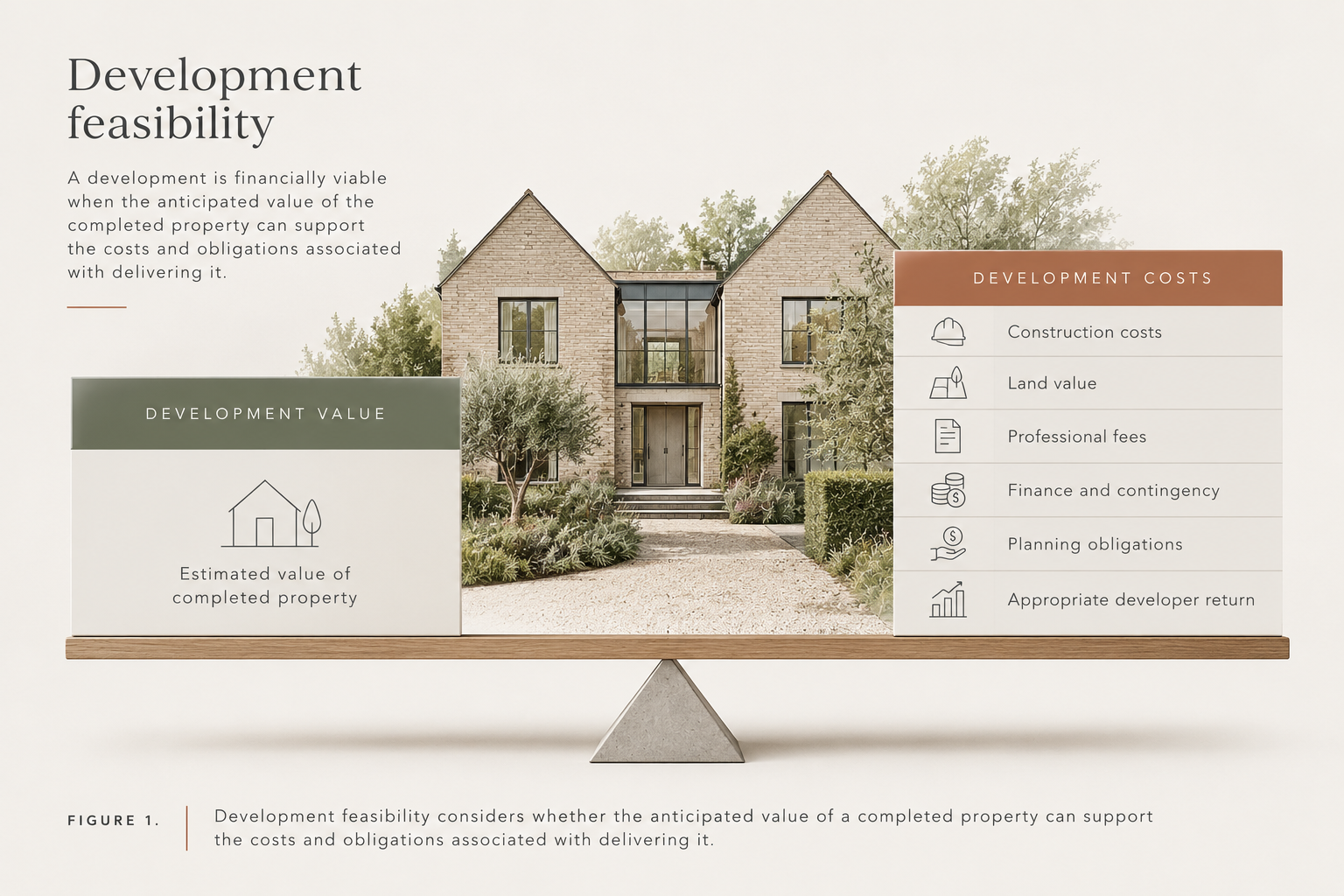
Figure 1. Development feasibility considers whether the anticipated value of a completed property can support the costs and obligations associated with delivering it.
2. Understanding Section 106 and Affordable Housing Contributions
Section 106 agreements are legal agreements made under the Town and Country Planning Act 1990. They are used to secure planning obligations associated with a proposed development.
These obligations can include financial contributions towards affordable housing, infrastructure or other measures necessary to make a development acceptable in planning terms.
Affordable housing contributions play an important role in supporting local housing provision. However, the requirements vary between planning authorities, and the financial implications can sometimes be unexpected, particularly for smaller developments.
How does this apply in Three Rivers?
Three Rivers District Council has adopted local planning policies and supplementary guidance addressing affordable housing contributions.
The Council's established local approach has included seeking contributions from developments resulting in a net increase of one or more dwellings, including financial contributions from smaller schemes.
However, the applicability of contributions to individual developments must be assessed against current national and local planning policy, including any relevant exemptions or restrictions.
This is particularly important for homeowners considering the construction of a single additional dwelling within their garden.
A replacement dwelling that does not increase the number of homes should not automatically be treated in the same way as a proposal creating an additional dwelling.
It is also important to distinguish Section 106 obligations from the Community Infrastructure Levy (CIL), which operates under a separate charging framework.
3. How Much Are Affordable Housing Contributions in Three Rivers?
Three Rivers District Council's Affordable Housing Supplementary Planning Document identifies geographical market areas with different base contribution rates.
The published base rates range from £350 to £1,250 per square metre of gross internal floor area, depending on the development's location.
These figures are subject to indexation from June 2011, meaning the amount potentially payable today may be substantially higher than the original published rates.
For example, the Council's highest-value market area includes locations such as Chorleywood, Moor Park, Loudwater, Eastbury and parts of Rickmansworth.
Other areas, including Croxley Green, Abbots Langley, Kings Langley and parts of the Watford fringe, fall within different contribution bands.
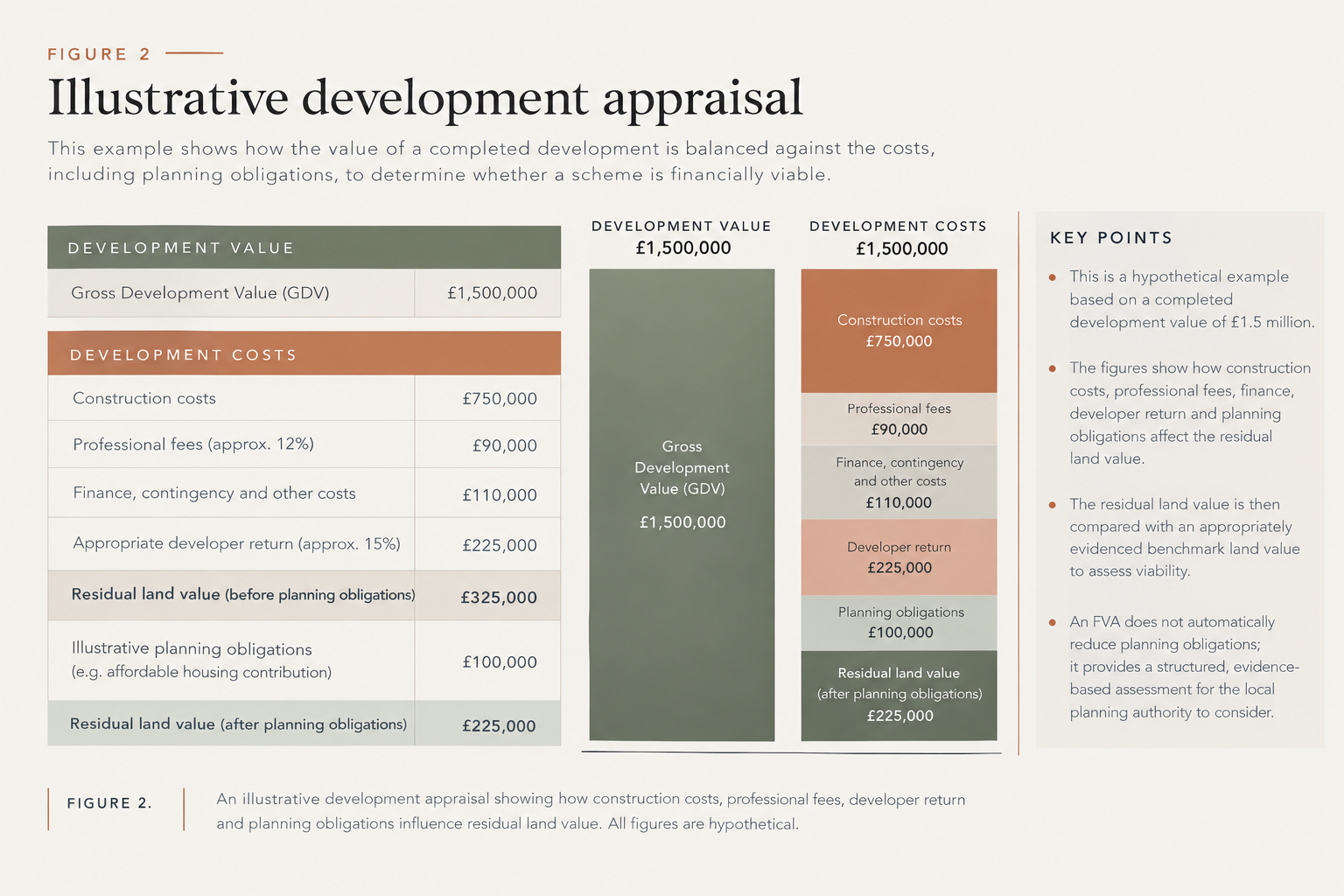
Figure 2. Three Rivers District Council's published affordable housing contribution bands. These represent historic base rates and are subject to indexation. The applicable market area and current contribution requirements should be confirmed against the Council's guidance.
To illustrate the potential financial implications, applying a base rate of £1,250/m² to a hypothetical 200m² dwelling would produce a contribution of £250,000 before indexation, assuming the relevant policy and calculation methodology applied.
This is not an estimate of the contribution payable for a particular site. Rather, it demonstrates why understanding potential planning obligations before committing to a detailed design is important.
The Council's Affordable Housing Supplementary Planning Document provides further information about its published approach and geographical market areas.
Planning policies and contribution requirements can change. Current national and local requirements should always be confirmed before relying on these figures for a development appraisal.
4. What Is a Financial Viability Assessment?
A Financial Viability Assessment (FVA) is a detailed financial appraisal that examines whether a proposed development can reasonably support its anticipated costs and planning obligations.
While development feasibility considers the wider practicality of a project, an FVA focuses specifically on its financial position.
A typical assessment considers:
Gross Development Value (GDV): The estimated market value of the completed development.
Construction Costs: The anticipated cost of building the property, including site preparation and infrastructure.
Professional Fees: Architectural, engineering, planning and other professional fees, alongside relevant project expenditure.
Finance and Contingencies: Allowances for borrowing costs, unexpected expenditure and other financial risks.
Benchmark Land Value: An appropriately evidenced land value against which development viability is assessed.
Developer Return: An allowance reflecting the risks associated with undertaking the development.
Planning Obligations: Applicable Section 106 contributions and other financial requirements.
These elements are brought together to establish the development's residual land value.
This represents the amount remaining after accounting for development costs, planning obligations and an appropriate developer return.
A formal viability assessment considers this figure against an appropriately evidenced benchmark land value.
An illustrative development appraisal
Consider a hypothetical residential development with an anticipated completed value of £1.5 million.
The appraisal might include £750,000 in construction costs, £90,000 in professional fees, £110,000 in finance and other expenditure, and £225,000 for developer return.
Before planning obligations, this would leave a residual land value of £325,000.
If the development were also subject to £100,000 in planning obligations, the residual land value would reduce to £225,000.
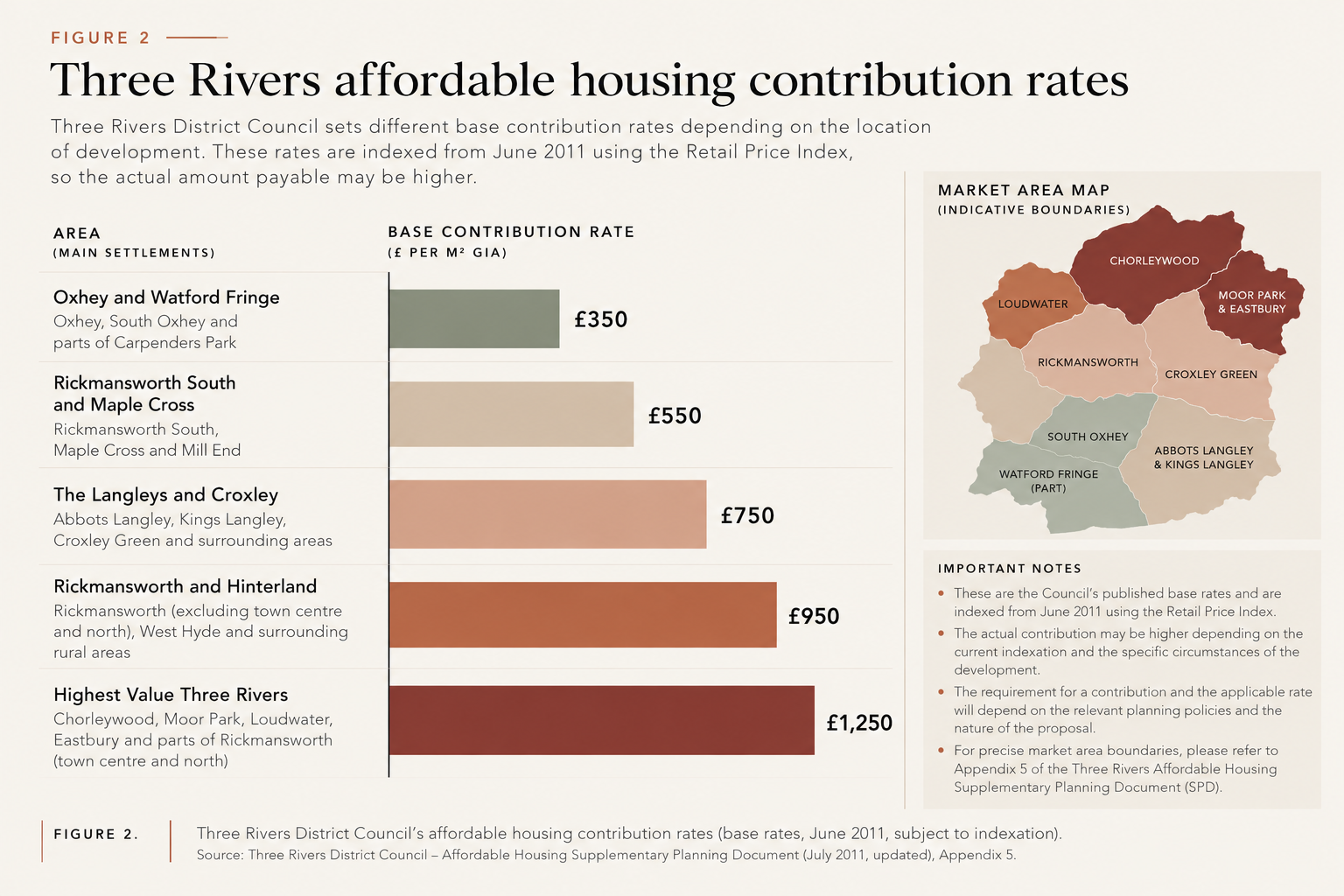
Figure 3. An illustrative development appraisal showing how construction costs, professional fees, developer return and planning obligations influence residual land value. All figures are hypothetical.
The important consideration is how the residual land value compares with an appropriately evidenced benchmark land value.
Where the residual land value falls below the benchmark, this may indicate a viability concern requiring further examination.
However, an FVA does not automatically establish that a planning contribution should be reduced. It provides a structured, evidence-based assessment for the local planning authority to consider.
5. When Might a Financial Viability Assessment Be Appropriate?
National planning policy generally expects developments complying with up-to-date planning policies to be financially viable.
However, particular site characteristics may justify a more detailed assessment.
Examples include:
Challenging ground conditions, requiring substantial foundations or ground improvement.
Significant changes in site levels, resulting in extensive retaining structures.
Restricted construction access, increasing building costs.
Infrastructure requirements, including drainage diversions or utility connections.
Other site-specific constraints that materially affect construction expenditure.
These circumstances can influence the relationship between development value and the costs required to deliver a project.
Where appropriately justified, an FVA can provide supporting evidence for the Council to consider alongside its planning policies.
Affordable housing contributions are an important part of the planning system. Financial viability assessments provide a recognised process for examining whether a development can reasonably accommodate its obligations in its particular circumstances.
Not every development requires an assessment, and submitting one does not guarantee a particular outcome.
6. Why Early Feasibility Matters
One of the most common challenges with residential development is that financial considerations are sometimes examined too late.
A homeowner might commission architectural drawings, progress a planning application and only subsequently become aware of significant construction costs or planning obligations.
By this stage, time and money may already have been invested in a proposal that requires substantial reconsideration.
Consider a homeowner with a large garden
A homeowner in Rickmansworth might be considering whether part of their garden could accommodate a detached dwelling.
An initial architectural feasibility study could investigate the potential size and position of the property, access arrangements, neighbouring amenity and planning constraints.
However, understanding whether the proposal makes financial sense requires further consideration.
What might the completed dwelling be worth? How much would construction cost? Are there unusual site conditions? Could affordable housing contributions apply?
These questions may influence whether the project proceeds and what form it takes.
For example, a larger dwelling might achieve a higher market value but could also increase construction expenditure and potentially affect planning contributions.
The objective is not simply to maximise the size of a proposed building, but to establish a development that balances architectural quality, planning considerations and financial deliverability.
7. How Architectural Design Can Influence Development Viability
Architectural design directly influences development costs.
The size, form, layout and specification of a proposed dwelling can all affect construction expenditure.
For example, a relatively simple structural arrangement may be more economical than one requiring extensive structural transfers, complicated roof forms or substantial excavation.
Similarly, positioning a dwelling within a site can influence groundworks, drainage infrastructure, access arrangements and retaining structures.
These considerations are particularly relevant to constrained residential plots, where relatively small design decisions can have substantial cost implications.
An architectural designer can help explore alternative arrangements and identify opportunities to simplify construction without unnecessarily compromising the quality of the finished development.
Early collaboration with a quantity surveyor or cost consultant can also provide a more reliable basis for assessing feasibility, rather than relying solely on broad construction estimates.
8. How LOTA Architecture Can Help
At LOTA Architecture, we work with homeowners, landowners and small residential developers across Three Rivers and the surrounding areas, helping them understand the potential of their properties before committing to a particular development strategy.
Our involvement can begin at the earliest stages, when clients are still considering whether a development is worth pursuing.
Architectural Feasibility Studies
We can assess the potential of a site, explore alternative development options and identify planning constraints that may influence what can reasonably be achieved.
Planning Advice and Applications
We can help clients understand the planning considerations relevant to their proposals, including potential Section 106 obligations, and coordinate the preparation and submission of planning applications.
Design and Construction Cost Considerations
We can explore how building size, layout, structural arrangements and specification influence construction costs, working alongside quantity surveyors and other consultants where appropriate.
Coordination of Financial Viability Assessments
Where a formal FVA is appropriate, we can coordinate the architectural drawings, floor area calculations and technical information required by independent viability specialists.
The financial assessment itself should be prepared by a suitably qualified professional, but coordinating the design and financial information can help establish a more coherent development strategy.
Our aim is to help clients understand what is achievable, identify potential challenges early and make informed decisions before committing significant expenditure.
9. Considering a Residential Development in Three Rivers?
Whether you're exploring the possibility of building a new home within your garden, developing a plot of land or replacing an existing property, understanding the practical and financial implications from the outset can make a considerable difference.
A successful development requires more than a design capable of securing planning permission. It also needs to be practical to construct, appropriately costed and financially deliverable.
Start With an Architectural Feasibility Study
If you own a property or plot of land and are unsure what might be achievable, an initial architectural feasibility study is often the most sensible place to start.
At LOTA Architecture, we can help you explore your site's potential, consider alternative development options and identify the planning and technical matters that may influence your project.
This early advice can be particularly valuable if you're considering a new dwelling within your garden, exploring a potential development site or assessing whether to purchase land.
We work throughout Three Rivers, including Rickmansworth, Chorleywood, Croxley Green, Abbots Langley, Kings Langley, Moor Park and the surrounding areas.
Get in touch with LOTA Architecture to discuss your site and arrange an initial consultation.
